

อะละวี
 ษูลฟะกอร ดาบอะลีที่วาดแบบตามลวดลาย เป็นสัญลักษณ์สำคัญทั้งฝ่ายอะละวีกับชีอะฮ์แบบดั้งเดิม | |
| ประชากรทั้งหมด | |
|---|---|
| ประมาณ 3 ล้าน[1] | |
| ภูมิภาคที่มีประชากรอย่างมีนัยสำคัญ | |
 ซีเรีย ซีเรีย | น้อยกว่า 3 ล้าน[2] |
 ตุรกี ตุรกี | 500,000-1 ล้าน[3][4] |
 เลบานอน เลบานอน | 100,000[5][6][7] |
 เยอรมนี เยอรมนี | 70,000[8][9] |
| เลบานอน/ที่ราบสูงโกลัน | 2200 คนอาศัยที่เฆาะญัร ส่วนใหญ่มีทั้งสิทธิพลเมืองซีเรียและอิสราเอล[10] |
 ออสเตรเลีย ออสเตรเลีย | 2% เป็นชาวเลบานอนในประเทศออสเตรเลีย[11] |
| ภาษา | |
| อาหรับ, ตุรกี | |
อะละวี (อาหรับ: علوية อะละวียะฮ์) หรือ นุซัยรี[14] (อาหรับ: نصيرية นุศ็อยรียะฮ์) เป็นสาขาของศาสนาอิสลามนิกายชีอะฮ์[15][ไม่แน่ใจ ] กลุ่มอะละวียกย่องอะลี (อะลี อิบน์ อะบีฏอลิบ) เป็นอิหม่ามคนแรกของสำนักสิบสองอิมาม เชื่อว่ากลุ่มนี้ก่อตั้งในคริสต์ศตวรรษที่ 9 โดยอิบน์ นุศ็อยร์
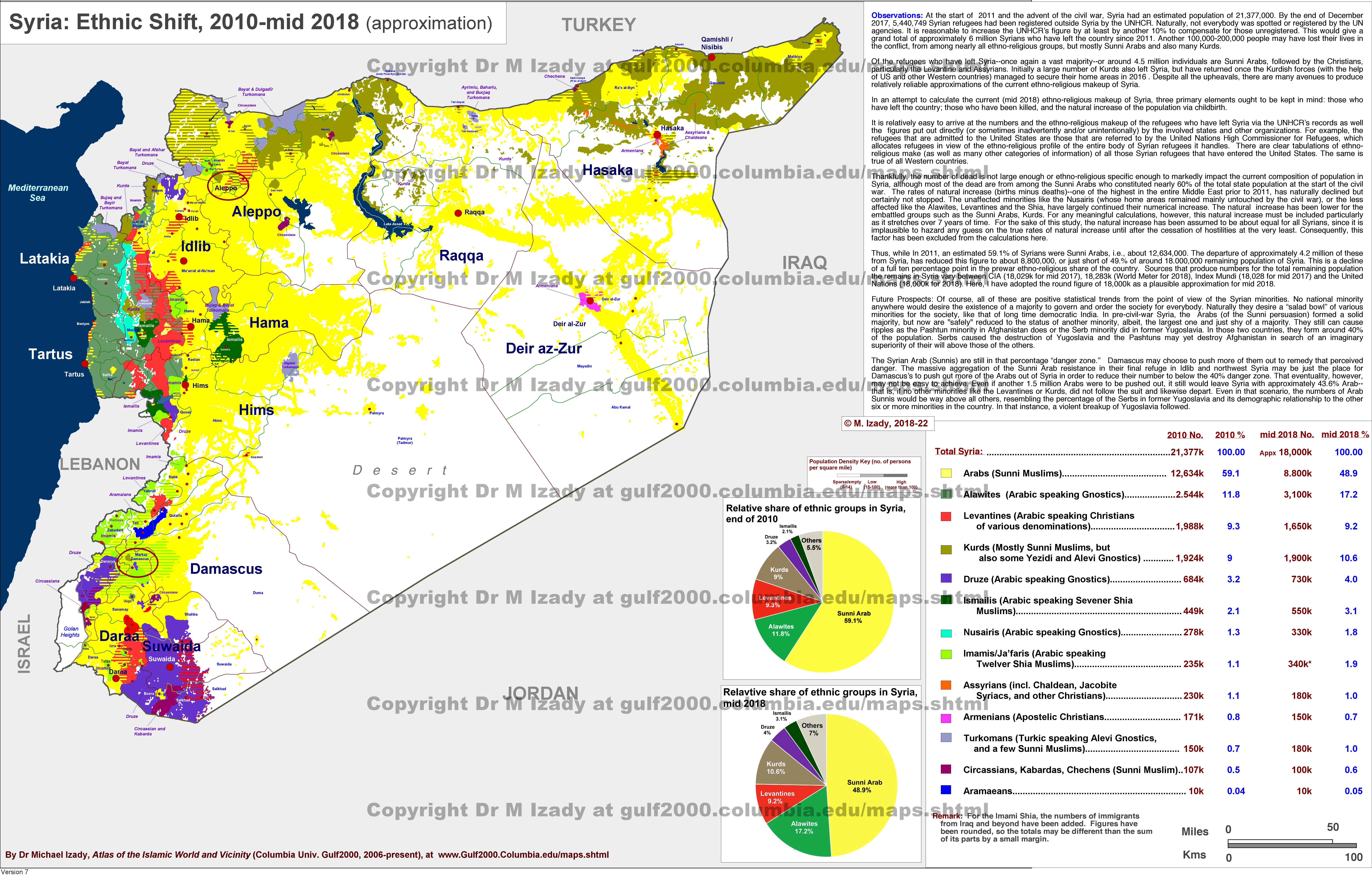
รายงานจากงานวิจัยของเมฮร์ดาด อิซาดีย์ (Mehrdad Izady) มีอะละวีอยู่ในประชากรซีเรียร้อยละ 17.2 ซึ่งเพิ่มขึ้นจากร้อยละ 11.8 ใน ค.ศ. 2010[16] และเป็นชนกลุ่มน้อยสำคัญในจังหวัดฮาทัย ประเทศตุรกี และภาคเหนือของประเทศเลบานอน สาขานี้มักสับสนกับลัทธิแอเลวี ซึ่งเป็นลัทธิศาสนาต่างหากในประเทศตุรกี[17][18][19][20]
เทววิทยาและพิธีกรรมของอะละวีมีความแตกต่างจากชีอะฮ์สายหลักหลายแบบ เช่น ในช่วงทำพิธี กลุ่มอะละวีดื่มไวน์ในฐานะการเปลี่ยนสภาพของอะลี[21] ในขณะที่มุสลิมกลุ่มอื่น ๆ ห้ามดื่มเครื่องดื่มแอลกอฮอล์ อะละวีส่งเสริมให้ดื่มมันได้แค่พอเหมาะ และพวกเขาเชื่อในเรื่องการกลับชาติมาเกิด[22]
อ้างอิง[แก้]
- ↑ "Primer on the Alawites in Syria - Foreign Policy Research Institute". www.fpri.org. สืบค้นเมื่อ 13 April 2021.
- ↑ "The 'secretive sect' in charge of Syria". BBC News. 17 May 2012. สืบค้นเมื่อ 13 April 2021.
- ↑ Cassel, Matthew. "Syria strife tests Turkish Alawites".
- ↑ Spencer, Richard (3 April 2016). "Who are the Alawites?". The Telegraph.
- ↑ http://www.repost.us/article-preview/#!hash=0467cbf01990a23ab00bfe1a45696310 เก็บถาวร 6 สิงหาคม 2012 ที่ เวย์แบ็กแมชชีน
- ↑ "Lebanese Allawites welcome Syria's withdrawal as 'necessary'". The Daily Star. 30 April 2005.
- ↑ "Lebanon's Alawi: A Minority Struggles in a 'Nation' of Sects". Al Akhbar English. 8 November 2011. คลังข้อมูลเก่าเก็บจากแหล่งเดิมเมื่อ 4 March 2016. สืบค้นเมื่อ 6 July 2012.
- ↑ "Mitgliederzahlen: Islam", in: Religionswissenschaftlicher Medien- und Informationsdienst|Religionswissenschaftliche Medien- und Informationsdienst e. V. (Abbreviation: REMID), Retrieved 13 February 2017
- ↑ "Anzahl der Muslime in Deutschland nach Glaubensrichtung im Jahr 2015* (in 1.000)", in: Statista GmbH, Retrieved 13 February 2017
- ↑ UNIFIL Press Kit เก็บถาวร 2021-08-14 ที่ เวย์แบ็กแมชชีน p.6
- ↑ Ghassan Hage (2002). Arab-Australians today: citizenship and belonging (Paperback ed.). Melbourne University Publishing. p. 40. ISBN 0-522-84979-2.
- ↑ "MOḤAMMAD B. NOṢAYR". Encyclopaedia Iranica. electricpulp.com.
- ↑ "ḴAṢIBI". Encyclopaedia Iranica. electricpulp.com.
- ↑ Gisela Procházka-Eisl; Stephan Procházka (2010). The Plain of Saints and Prophets: The Nusayri-Alawi Community of Cilicia (Southern Turkey) and Its Sacred Places. Otto Harrassowitz Verlag. p. 20. ISBN 978-3-447-06178-0.
...for nearly a millenium the term by far most often used in both Oriental and Western sources for this group has been 'Nusayri'.
- ↑ Madeleine Pelner Cosman; Linda Gale Jones (2009). Handbook to Life in the Medieval World, 3-Volume Set. Infobase Publishing. p. 407. ISBN 978-1-4381-0907-7.
- ↑ Izady, Michael. "Syria: Ethnic Shift, 2010-mid 2018".
{{cite web}}: ไม่รู้จักพารามิเตอร์|websit=ถูกละเว้น (help) - ↑ Zhigulskaya, Darya. "Alevis vs. Alawites in Turkey: From the General to the Specific". International Journal of Humanities and Education (IJHE). 5 (10): 195–206.
- ↑ Aringberg-Laanatza, Marianne. “Alevis in Turkey–Alawites in Syria: Similarities and Differences.” In Alevi Identity: Cultural, Religious and Social Perspectives. Edited by Tord Olsson, Elisabeth Özdalga, and Catharina Raudvere, 181–199. Richmond, UK: Curzon, 1998.
- ↑ "Erdogan, Iran, Syrian Alawites, and Turkish Alevis". The Weekly Standard. 29 March 2012. สืบค้นเมื่อ 6 July 2012.
- ↑ Gisela Procházka-Eisl; Stephan Procházka (2010). The Plain of Saints and Prophets: The Nusayri-Alawi Community of Cilicia (Southern Turkey) and Its Sacred Places. Otto Harrassowitz Verlag. p. 20. ISBN 978-3-447-06178-0.
- ↑ Michael Knight (10 December 2009). Journey to the End of Islam. Soft Skull Press. p. 128. ISBN 978-1-59376-552-1.[ลิงก์เสีย]
- ↑ Abdel Bari Atwan (2015). Islamic State: The Digital Caliphate. Saqi. p. 58. ISBN 978-0-86356-101-6.
อ่านเพิ่ม[แก้]
- Bar-Asher, Meir M. (2003). "NOṢAYRIS". Encyclopaedia Iranica.
- Kazimi, Nibras. Syria Through Jihadist Eyes: A Perfect Enemy, Hoover Institution Press, 2010. ISBN 978-0-8179-1075-4.
- Friedman, Yaron (2010). The Nuṣayrī-ʿAlawīs : An Introduction to the Religion, History and Identity of the Leading Minority in Syria (PDF). Leiden, Boston: Brill. ISBN 978-90-04-178922. สืบค้นเมื่อ 31 July 2016.
- Halm, Heinz (1995). "Nuṣayriyya". ใน Bosworth, C. E.; van Donzel, E.; Heinrichs, W. P. & Lecomte, G. (บ.ก.). The Encyclopaedia of Islam, New Edition, Volume VIII: Ned–Sam. Leiden: E. J. Brill. pp. 145–148. ISBN 978-90-04-09834-3.
- Procházka-Eisl, Gisela; Procházka, Stephan (11 August 2010). The Plain of Saints and Prophets: The Nusayri-Alawi Community of Cilicia ... Harrassowitz Verlag. ISBN 978-3-447-06178-0. RFWRfO2016
- Worth, Robert F. (2016). A Rage for Order: The Middle East in Turmoil, from Tahrir Square to ISIS. Pan Macmillan. p. 82. ISBN 9780374710712.
- Winter, Stefan (2016). A History of the 'Alawis: From Medieval Aleppo to the Turkish Republic. Princeton and Oxford: Princeton University Press. ISBN 9780691173894.
- Al Marouf, Emil Abbas (2016). History of Alawites in the Levant (ภาษาอาหรับ). Dar Al Amal & Al Salam.
แหล่งข้อมูลอื่น[แก้]